


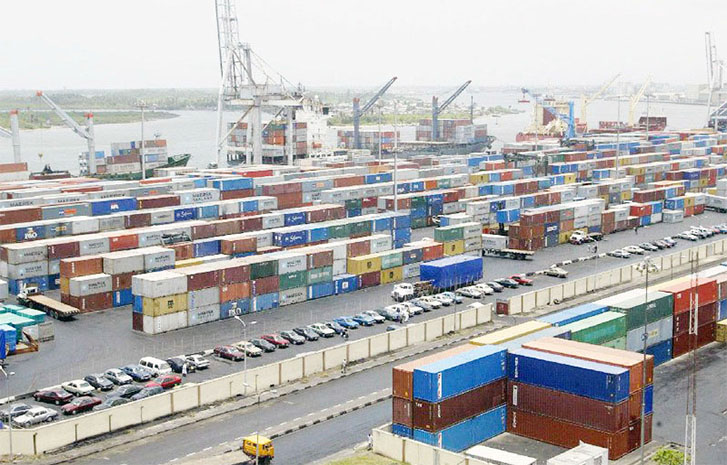
The value of forex (FX) officially demanded by businesses for the import of input is estimated at $23.2 billion, report by Afrinvest West Africa Limited, has shown.
The economic report by the investment and research firm, said the demand has not been fully met in the last seven years, forcing many businesses to seek alternative funding plan in the parallel forex market. The Central Bank of Nigeria’s (CBN’s) inability to meet the demand has been linked to the collapse of inflows from crude oil exports.
Managing Director, Afrinvest West Africa, Ike Chioke, said the firm’s assessment of FX demand-supply dynamics since 2006 revealed that the CBN has failed to meet the estimated average annual demand of $23.2 billion in seven of the last eight years since 2015.
The only exception to the rule was in 2019, when the demand was met. The report explained that to achieve a lasting solution to the FX rate quagmire, strategic fiscal policies are needed to boost economic productivity, including increasing oil production, enhancing remittances through official channels, optimising non-oil export size, and attracting long-term foreign direct investment.
The CBN has however, initiated key policies meant to reduce to volume of forex demand and conserve forex. The apex bank recently authorised dealers to pay personal and business travel allowances to their customers through debit or credit cards instead of cash is expected to reduce round-tripping, wastages and boost dollar liquidity.
- Read also:
- Naira pressure eases on $10b forex inflows prospect
- CBN to issue N2.2 billion T-Bills in fourth quarter
- Investors List Strategic Benefits of Access Holdings’ Rights Issue
Banks have also informed their customers that effective immediately, Personal Travel Allowances (PTA), Business Travel Allowances (BTA), and other foreign exchange purchases would only be disbursed via a dollar travel card.
Also, the CBN-led Monetary Policy Committee consistently raised the Monetary Policy Rate (MPR) why modifying other key rates. The benchmark interest rate was raise by 600 basis points to 26.75 per cent, action meant to ease inflation, boost foreign capital inflows and gradually correcting exchange rate misalignment.
There was also a government directive to the Nigerian National Petroleum Corporation (NNPC) and other Ministries, Departments, and Agencies (MDAs) to remit dollar revenues to the CBN to boost reserves and dollar positions.
On that, CBN Governor, Olayemi Cardoso remarked that the decision was a positive step aimed at enhancing investor confidence in the economy.
President, Bank Customers Association of Nigeria, Uju Ogubunka described the decision of the NNPC to remit dollar receipts directly into the CBN account as step in the right direction.
He said aside having the funds to add to the dollar liquidity in the economy, it raises confidence of foreign portfolio investors and foreign direct investors on the economy. Ogubunka said the NNPC has the right to withdraw the funds at will but during the period of deposits, there will be liquidity boost.
Ogubunka said: “The NNPC fund will also provide some measure of control for the CBN and put the economy in better standing.” On the $2.4 billion forex backlog fraud, he said the apex bank should go beyond the disclosures, and seek prosecution of the companies and individuals involved. “I think the companies that were involved in the forex backlog fraud should be named, and prosecuted. That will serve as deterrent for others”.
president, association of bureaux de change operators, Aminu Gwadabe, said the remittance of NNPC’s inflows directly to the CBN account will show transparency and accountability of the institutions.
He said: “The CBN has taken major steps to see that dollar liquidity in the economy improves, and that will invariably, help in stabilising the naira. With improved liquidity, foreign investors will have more confidence in repatriating their dividends from the country”.