
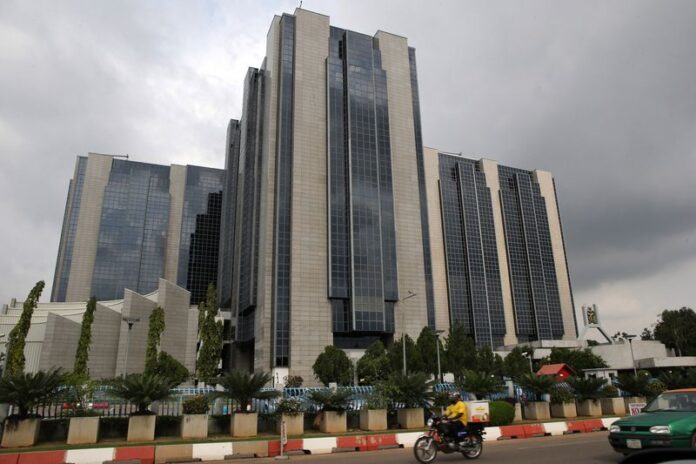
Members of the Central Bank of Nigeria (CBN)-led Monetary Policy Committee have said that rising political spending and forex demand pressures associated with the 2027 elections will test the resilience of the domestic economy.
In their personal notes at the February MPC meeting – the MPC members- Aloysius Ordu, Bandele Amoo, Lamido Yuguda, Muhammad Sani Abdullahi and Philip Ikeazor reiterated the stability and resilience of the post-recapitalisation banking sector.
Ordu said stronger naira is already positioning Nigerian capital market as Africa’s top performer. He said the ongoing banking sector recapitalisation has progressed considerably, with over 70 per cent of fresh capital sourced domestically.

“High debt service cost continues to constrain fiscal policy, complicating policy coordination. However, fiscal consolidation measures, including planned return to a single budget cycle and the introduction of Executive Order 9, 2026, are expected to strengthen transparency and improve fiscal health,” he said.
“Revenue performance shows incremental improvement, with distributable federation revenue rising to N1.969 trillion in January 2026 from N1.928 trillion in December 2025. Nonetheless, government revenues continue to fall short of target, widening fiscal gaps and increasing borrowing needs,” he added.
Amoo said the banking system remains stable and resilient, with recapitalisation efforts bolstering financial soundness indicators.
“However, credit transmission to productive sectors remains weak, with concentration in oil & gas and commerce crowding out agriculture and SMEs. The external sector shows resilience, supported by remittance inflows and impressive reserve accretion. Gross external reserves rose significantly to US$50.45bn as of February 16, 2026, the highest in 13 years. This provides an import cover of 9.68 months for goods and services. The naira has maintained relative stability, with positive prospects of further appreciation,” he said.
“My primary concern is the persistence of excess liquidity from fiscal injections, which could undermine disinflation gains and exchange rate stability. The 75 per cent Cash Reserve Ratio on non-TSA deposits has helped sterilise public sector induced liquidity, but fiscal spending pressures linked to the 2026 budget cycle, and early political activities ahead of the 2027 elections may heighten risks,” he added.
Continuing, he said Nigeria’s macroeconomic fundamentals continue to improve, with reforms restoring investor confidence, moderating inflation, and improving external buffers.
“The durability of these gains depends on deepening structural reforms, diversifying exports, and strengthening institutional credibility,” he said.
Yuguda said the success of the just concluded bank recapitalization programme may also introduce additional liquidity.
“How banks channel their enhanced capital into real-sector lending will influence growth, inflation, and financial stability dynamics. Furthermore, potential increases in fiscal spending associated with the electoral cycle could generate demand pressures and disrupt the disinflation trajectory,” he said.
For Abdullahi, exchange rate pressures remain moderated and relative stability established signaling improved foreign exchange market liquidity and reduced speculative activity supported by the increase in gross external reserves to US$50.45 billion as of 16th February 2026 from US$42.77 billion at endDecember 2025. This will support the current account as it can support over 9 months of import for goods and services.
Ikeazor said CBN’s shift toward a more balanced monetary stance has helped maintain alignment between key macroeconomic stability indicators and the policy trajectory, supporting economic activity, moderating inflationary pressures, and anchoring expectations.
“Nonetheless, signs of a potential loss of economic momentum are emerging, reflected in softening demand, subdued credit to the core private sector, rising fiscal pressures from elevated recurrent spending and increased domestic borrowing,” he said.
“Domestically, the economy has also demonstrated resilience, even though growth in Q3‑2025 was weaker compared to Q2‑2025. This slowdown reflects soft aggregate demand and sluggish oil‑GDP performance, partly driven by a 2.38 per cent decline in crude‑oil production between the two quarters,” Ikeazor stated.
Nonetheless, non‑oil GDP continued to sustain momentum, supported by improvements in trade and real estate. Overall, moderating global inflation and rising crude‑oil prices are expected to support the domestic economy. However, the benefits of these favourable external conditions may be partially offset by declining domestic oil production. The net outcome will depend on the balance between global tailwinds and domestic constraints.

