
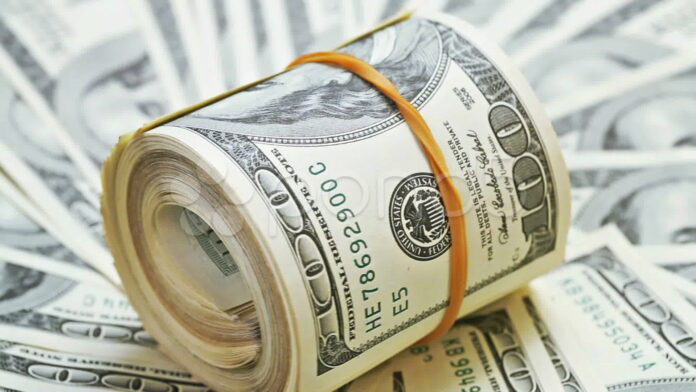
The Federal Government is taking strategic steps to de-dollarise the economy and boost value of the naira, Minister of Finance and Coordinating Minister for the Economy, Wale Edun, announced yesterday in Washington DC.
He broke the news during the investors parley held at the sidelines of the ongoing World Bank/International Monetary Fund Annual Meetings in Washington DC, United States.
As a partially dollarised economy, Nigerian operates with dollar bias for international trade, finance invoicing and of recent, store of value. Particularly, under high and persistent inflation, market participants defend themselves by shifting to dollar.

The most common type of dollarization is financial dollarization (FD), or asset substitution, caused by a poor performance of the local currency. The local currency is used more for payment transactions but is replaced by the dollar as saving asset or store of value.
But speaking on the theme: “A new Nigeria: An era of bold reforms” Edun said that government is asking manufacturers and businesses to invoice in naira, instead of dollar, thereby reducing demand for dollar in the domestic market.
The investors parley was attended by the Standard Chartered Bank, Goldman Sachs, JP Morgan, and strategic investors in the economy. Also present at the event are Governor of the Central Bank of Nigeria (CBN), Olayemi Cardoso, Director-General, Debt Management Office, Patience Oniha, Director-General of the Budget Office of the Federation, Tanimu Yakubu; Permanent Secretary, Federal Ministry of Finance, Mrs. Lydia Jafıya among others.
Edun, said government is also taking steps to ensure that more dollar flow into the economy, to stabilize and protect the naira. “We are asking people to invoice in naira, rather than dollar, thereby reducing the demand for dollar. We have moved to free market pricing in petrol, jet fuel, kerosene, and that is the first time in 40 years that we are doing that,” he said.
Edun said oil production is faced in the direction that is positive, and that means more dollar inflows into the economy, even as the security operatives, are working hard to ensure sustained rise in oil production.
He added that the financial markets and bond markets remain open to Nigerians in Diaspora to invest dollars to the economy.
Edun explained that essentially, it was October 2, that petrol subsidy was effectively removed through market-pricing practices. “It is now that we will assess the gains of the subsidy removal, which will be a huge dividend to the people,” he said.
On his part, Cardoso, said the last Monetary Policy Committee took cognizance of petrol subsidy removal, in its decisions. He said the CBN will issue more Open Market Operation (OMO) bills, to ensure market mechanisms reflect effectively.
On reports, that the Nigeria National Petroleum Corporation (NNPC) is mopping up dollars from the open market, Cardoso said: “The NNPC buying dollars from open market is not for the CBN to determine, because the NNPC remains a customer that is entitled to make its business decisions”.
He said with higher interest rates, more Nigerians will be more inclined to produce locally, even as inflows from Diaspora remittances continue to rise.
Deputy Governor, Economic Policy, CBN, Mohammed Sani-Abdullahi, said the apex bank is working to raise non-oil export earnings from around N3.6 billion to $10.3 billion. He said the external reserves have also hit a new high of $40.3 billion, and will continue to rise as oil production grows.
Sani-Abdullahi, said the Federal Government has taken strategic steps, to ensure that Nigeria remains a good investment destination for local and foreign investors.
Speaking on the naira, he said: “We’re not defending the naira, and we used to. We are rather building buffers. We want to improve supply organically, without the CBN putting in money all the time. We want to find that naira finds its natural level”.
We want to address liquidity risks, and ensure that the market functions. We are still in price discovery, we want to get to transparency and market determined rate for the naira.
He said volatility and rising demand for dollar was because some people always think that forex will not be available when they need it, leading to demand rush for the greenback.

